Published on Oct. 17, 2025
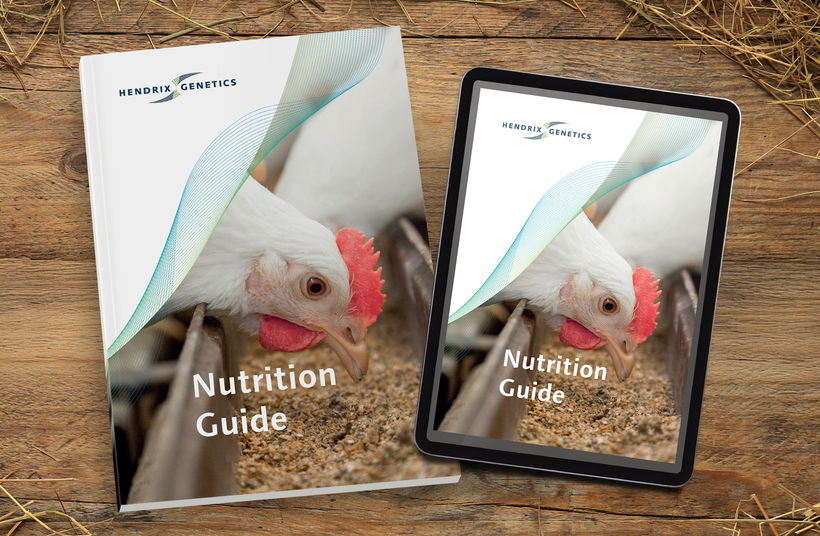
Updated Nutrition Guide 2025 - Designed for Performance, Built on Research
The updated Nutrition Guide 2025 reflects Hendrix Genetics’ continued focus on precision, sustainability and nutritional support for stable, high-performing layers.
Download your copy here.
With refined amino acid profiles, improved digestibility matrices and updated mineral strategies, the guide offers a more accurate and practical approach to feeding modern layer flocks.
A key enhancement is the inclusion of Standardised Ileal Digestible (SID) amino acids, alongside Apparent Faecal Digestible (AFD) values. SID values provide a more precise correction for endogenous losses and better reflect digestibility in today’s genetics.
Both systems are included for rearing and production phases, allowing nutritionists to formulate diets based on the most suitable raw material matrix.
In rearing, recommendations now include updated amino acid levels per phase, improved methionine plus cystine ratios to support feathering and immunity, and balanced calcium and phosphorus for optimal skeletal development. In production, amino acid ratios have been adjusted to support egg mass and shell quality, with lower lysine levels based on new insights. The phase structure has been refined, now extending up to 120 weeks of age, with smaller steps between phases to better match the hen’s physiological needs and her fantastic persistency.
One of the most significant changes is the reduction of calcium levels in early lay. Research shows that feeding closer to the hen’s actual calcium requirement improves long-term shell quality and supports feed intake during this critical period. This approach also allows for better inclusion of energy and amino acids, and aligns with our goal of longer laying cycles.
The guide also accounts for housing system differences. Birds in alternative systems benefit from better bone health and access to supplemental calcium sources, while cage-housed birds require more precise dietary support. Minimum and maximum levels have been adjusted accordingly.
Additional chapters cover sustainability, alternative raw materials, feed processing and storage, and updated mycotoxin thresholds
This update is more than a technical revision; it is part of a broader commitment to support customers with the latest science-based insights. By translating research and insights from several feed research institutes into practical feeding strategies, Hendrix Genetics continues to set the pace in knowledge dissemination, connecting science and industry to help producers achieve consistent performance and long-term success.